The hosting guide

Host the people, not every task

A generous gathering does not require one exhausted person. Set expectations early, give people real ownership, and design the room for the guests who are actually coming.

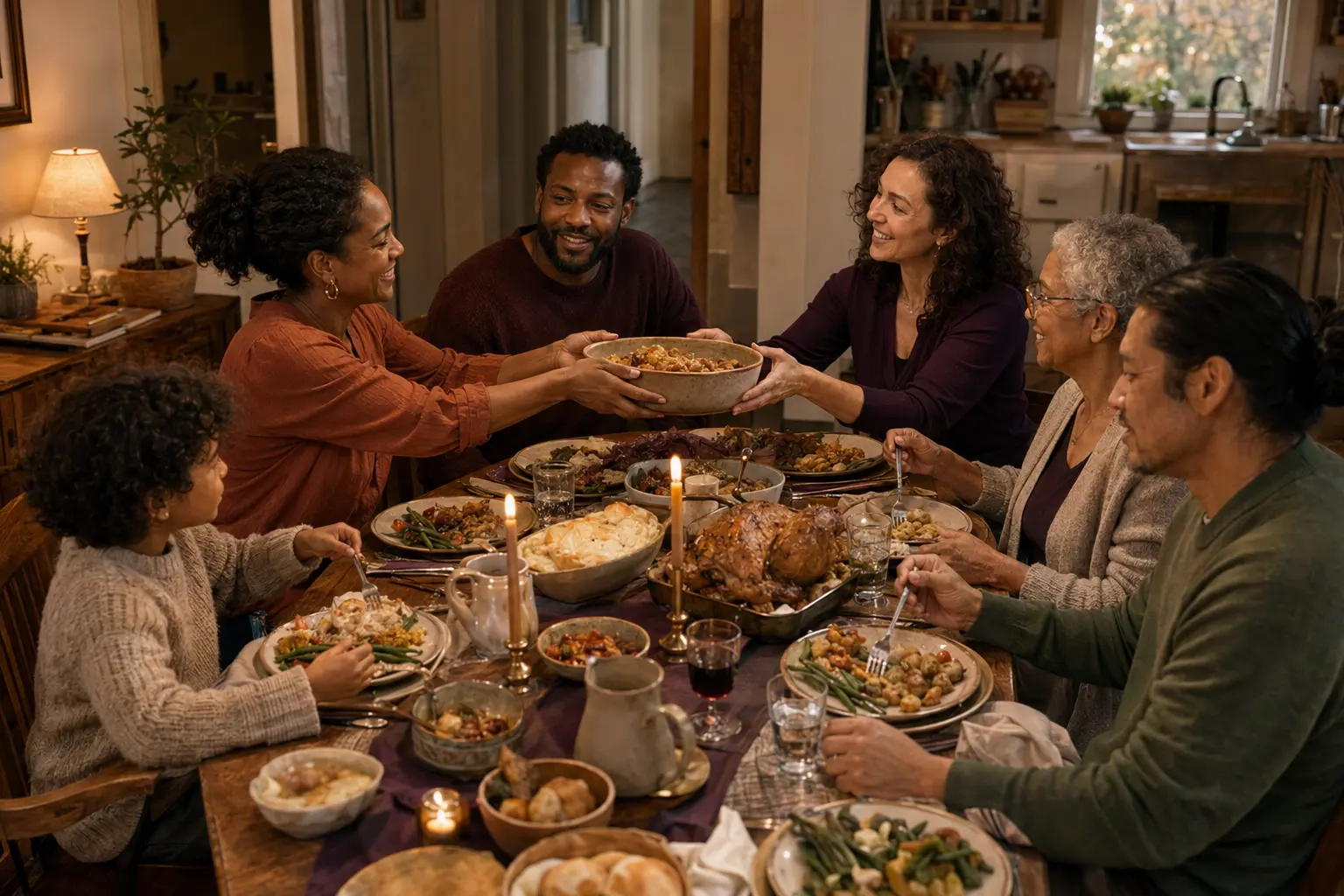
A multigenerational group shares serving dishes around a warm Thanksgiving table

The calm-host brief

AskConfirm allergies, dietary needs, accessibility, and arrival plans before the menu hardens.
AssignGive each helper one outcome, one deadline, and one serving instruction.
StageCreate a coat-and-bag landing zone, a drink station, and a place for incoming dishes.
SitProtect a real buffer before dinner so the host can change clothes, breathe, and join the table.
01

Before the invitation

Ask the questions that change the plan

Use specific language: “Are there allergies, dietary restrictions, mobility needs, sensory needs, or religious practices we should plan around?” A preference and a severe allergy require different preparation.

Confirm whether children need a high chair, a quiet activity, or an earlier meal. Ask overnight guests when they expect to arrive and leave.

  • Write dietary needs next to the guest, not on a separate list you can lose.
  • For allergies or celiac disease, discuss cross-contact directly and never promise safety you cannot provide.
  • Put the meal time in the invitation and describe it honestly: arrival at 2:00, dinner near 4:00.
02

Share the work

Make assignments complete

“Bring a side” transfers uncertainty, not work. A useful assignment names the dish category, quantity, arrival state, and serving equipment.

  • Good brief: “Cold green salad for eight, dressed just before dinner, with its serving tongs.”
  • Let the host own oven timing. Ask guests to bring dishes ready to serve or with a clearly agreed reheating window.
  • Assign drinks, ice, music, child activities, and cleanup. Cooking is not the only work.
03

The room

Design for comfort before decoration

Leave clear paths between the kitchen, table, and bathroom. Seat guests with mobility needs where they can arrive and leave without moving the whole table.

Make one lower-stimulation corner available. Keep music below conversation level and do not use scented candles around the food.

  • Place water on the table before anyone sits.
  • Label dishes discreetly where dietary needs matter.
  • Use stable chairs with backs and keep a few seats away from kitchen traffic.
04

The emotional weather

Leave room for a complicated holiday

Thanksgiving can carry grief, family tension, estrangement, financial pressure, or no personal meaning at all. Hospitality does not require forced gratitude or a debate everyone must join.

Offer rituals as invitations. Give guests a graceful way to step outside, skip a prompt, leave early, or contribute in a quieter way.

05

Overnight guests

Make the basics obvious

Show guests where towels, water, outlets, coffee, and breakfast live before the evening gets busy. Share the morning plan and any household quiet hours.

  • Clear one drawer, hook, or luggage surface.
  • Put the Wi-Fi details somewhere private and easy to find.
  • Choose a self-serve breakfast so the host does not begin a second production.

Next move

Turn good intentions into assignments

Feast Flow creates a menu, grouped shopping list, and share-the-work brief from your actual guest count.

Build the plan