Meaning and history

Keep the meaning. Retire the myth.

Traditions can hold gratitude, memory, food, mourning, humor, and change at once. Build rituals that belong to your people while learning a fuller history of the holiday.

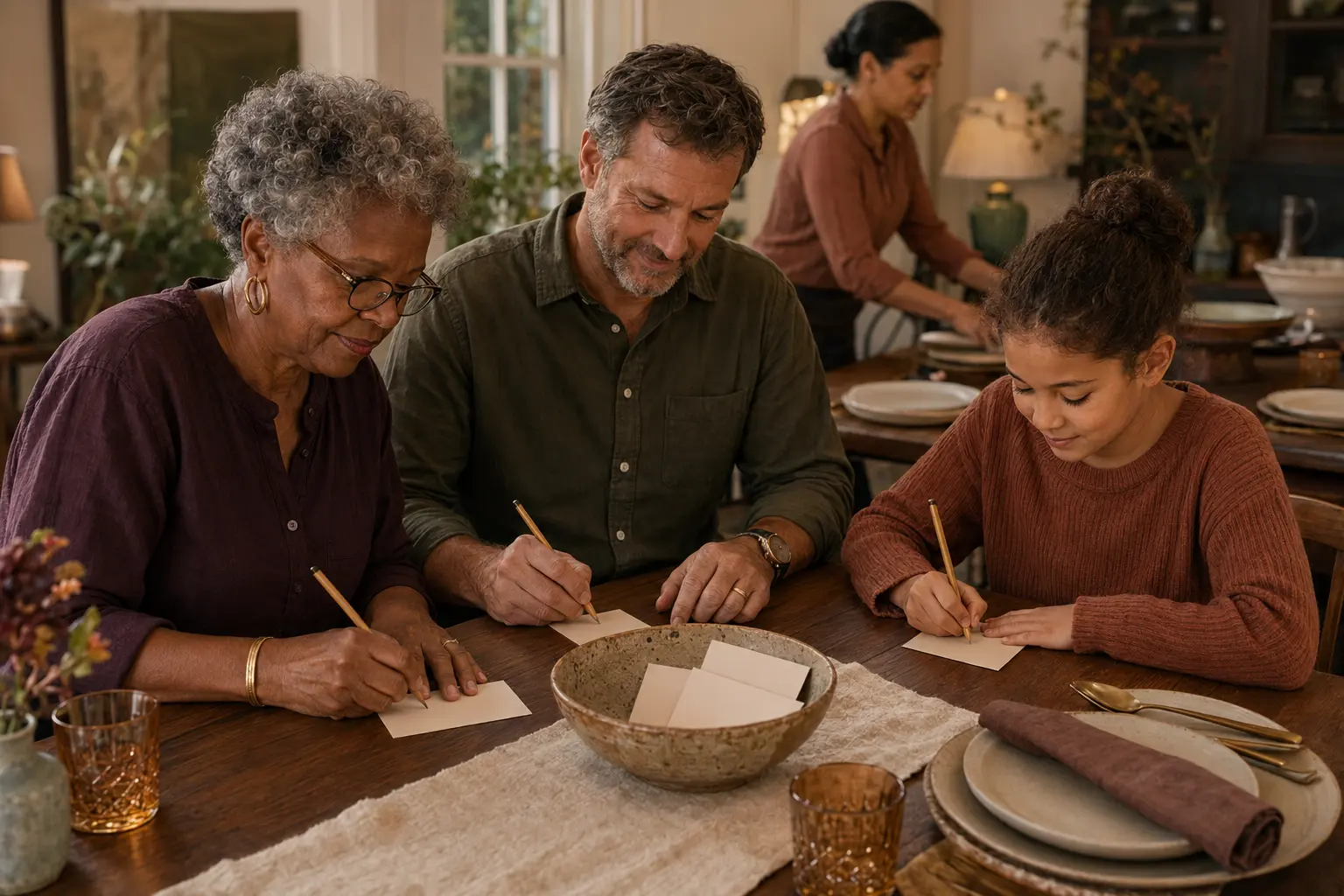
Three generations write private gratitude cards together before Thanksgiving dinner

Four meaningful rituals

RememberInvite one story about a person, recipe, or place the table carries forward.
ThankWrite private gratitude cards; sharing them aloud is optional.
ContributeChoose a local mutual-aid, food-bank, or community action before the holiday rush.
ContinueSend one recipe, photo, or recorded story to the next generation after dinner.
01

A fuller history

The familiar story is incomplete

The 1621 gathering in Patuxet, now Plymouth, is often presented as a simple friendship feast. The National Museum of the American Indian places it in the context of Wampanoag diplomacy, English settlement, colonization, and the consequences that followed.

Wampanoag people and other Native nations are contemporary, distinct communities, not characters from a shared origin story. Giving thanks and harvest observances existed in Native communities long before the United States holiday.

02

With children

Teach specificity, not costumes

Avoid generic “Native” costumes, headdresses, placemats, or crafts. They collapse hundreds of living nations into a stereotype and turn identity into decoration.

Use Native-authored books and museum resources. Name the Wampanoag when discussing 1621, ask whose perspective a story centers, and connect history to Native life today.

03

Around the table

Make gratitude invitational

A round-robin prompt can become pressure. Offer more than one way to participate: write something privately, thank one person, name something learned, or simply listen.

  • Put blank cards and pencils out before dinner.
  • Invite a recipe story while the dish is being served.
  • Make space for mourning and gratitude to coexist.
  • End with one concrete act of care for the week ahead.
04

Tradition design

Use a keep, change, begin test

Keep one practice that still feels alive. Change one practice that creates needless work or exclusion. Begin one small ritual that reflects who is at the table now.

The result should feel recognizable without forcing every year to imitate the last one.

For the meal

Let the menu carry memory and change

Start with a coherent menu, then keep the dishes your table would genuinely miss.

Explore complete menus